Void Filling & Soil Stabilization in Kansas City, MO
Soil washing out and slabs starting to drop? We connect you with a local contractor who fills the voids and stabilizes the soil to stop future settling.
Call (816) 382-6553Request sent
A local contractor will reach out shortly. Watch for a call from an unknown number.
Void Filling & Soil Stabilization in Kansas City, MO
Not every concrete problem is a slab that has already dropped, sometimes the soil is washing away and the voids are opening before the slab has fully settled. Downspouts, poor grading, and heavy Missouri rains scour fine soil from under and around slabs, and loose fill keeps consolidating, leaving hollow space the concrete eventually sinks into. We operate this website and connect property owners in Kansas City with independent local contractors who fill those voids and washouts and stabilize the soil, re-supporting slabs and stopping settling before it gets worse.
Stop settling before it starts
Commonly the soil washes out and voids form before a slab fully drops. Downspouts, poor grading, and heavy rains erode soil from under slabs, and poor fill keeps consolidating.
Filling those voids re-supports the slab and stops the settling before it becomes a bigger, costlier problem.
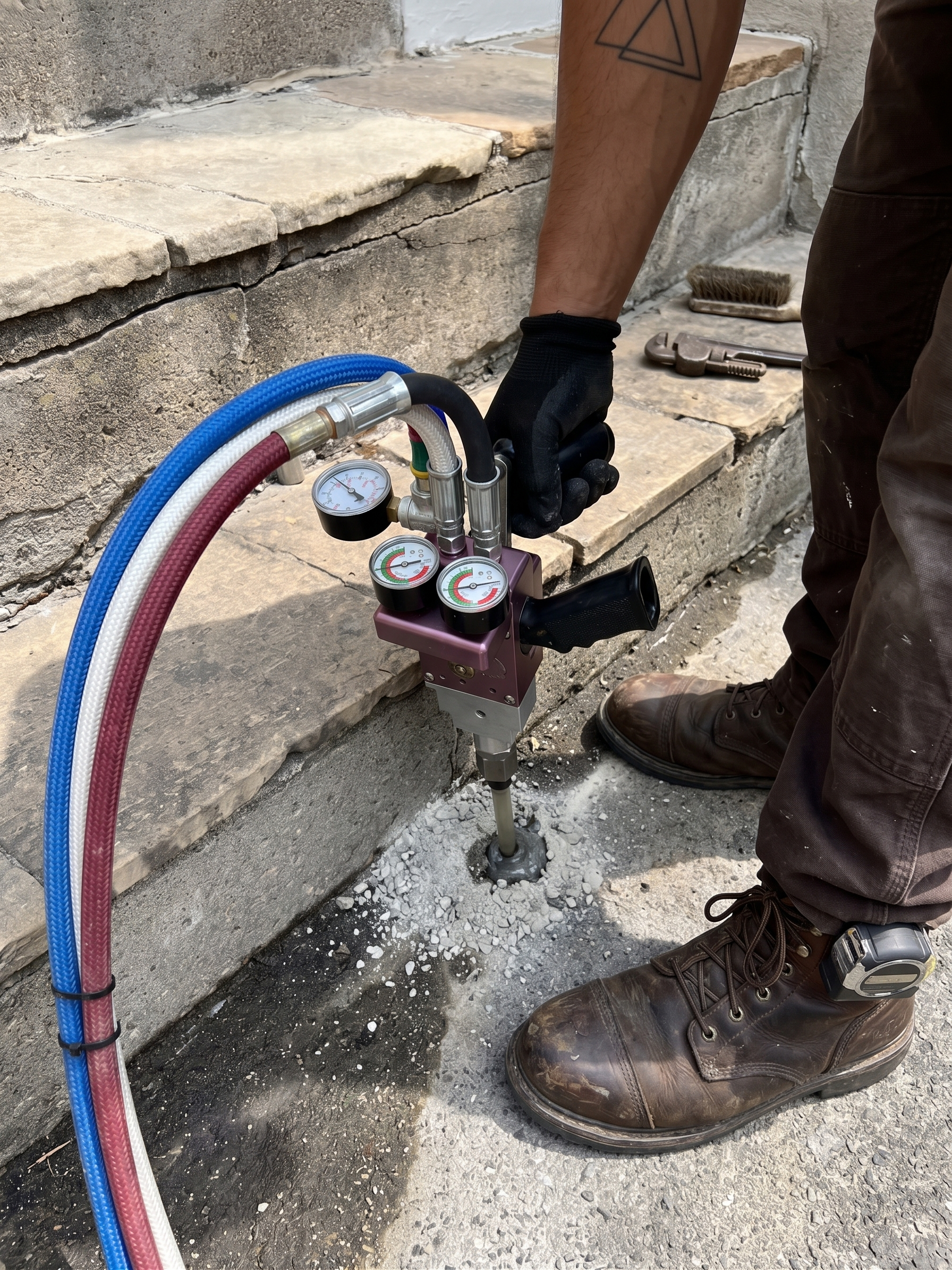
Address the water, not just the void
Filling a void without fixing the downspout or grading that caused it just invites it to wash out again. We connect you with Kansas City contractors who fill voids and washouts and address the water source behind them.
Filling voids and stabilizing soil
Not every concrete problem starts with a slab that has already dropped. Commonly the soil scours away first, and the voids open before the slab fully settles. In Kansas City, downspouts, poor grading, and heavy rains wash fine soil from under and around slabs, and loose fill on graded lots keeps consolidating, leaving hollow space the concrete above eventually sinks into. Filling those voids early re-supports the slab and stops the settling before it becomes a bigger problem.
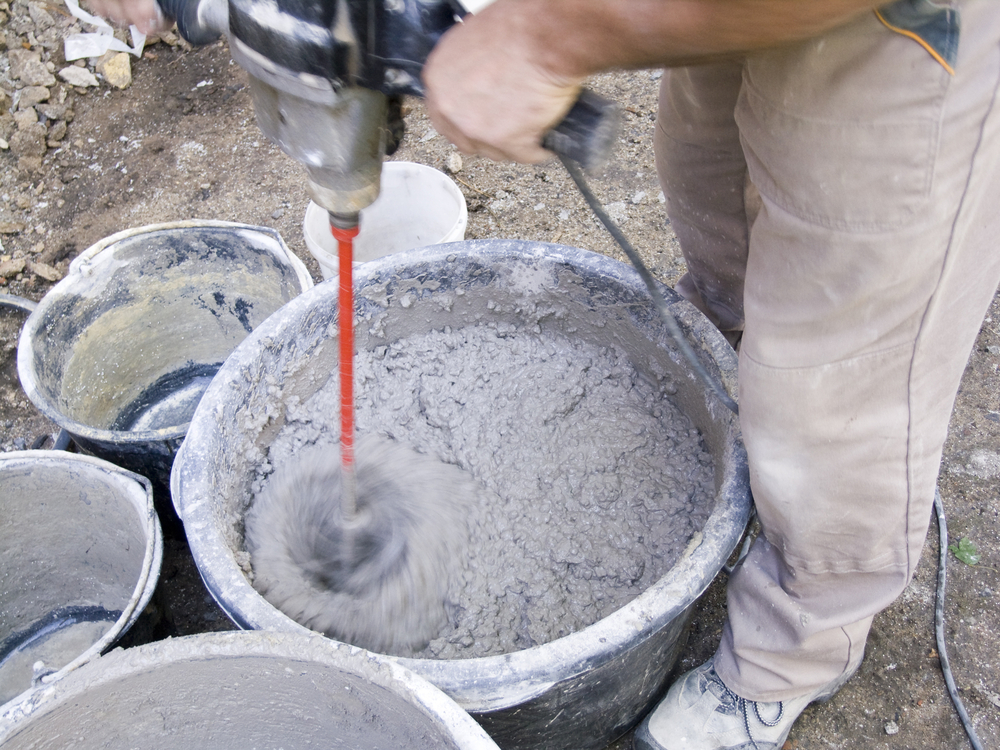
The process uses the same equipment as slab lifting: the contractor drills small holes where needed and pumps a cement-based slurry into the voids and washouts beneath and around the concrete, filling the empty space so the soil column is continuous again and the slab has solid support. Where a slab has begun to drop, filling the void and raising it are done together; where it hasn't yet, filling the void keeps it from dropping in the first place.
Void filling and soil stabilization also matter around foundations, walkways, and any concrete where a washout has left space underneath. As the underlying cause is in most cases water, a good contractor addresses the drainage as part of the work, since filling a void without fixing the downspout or grading that caused it just invites it to wash out again. A good Kansas City contractor identifies the root and handles both. Confirming a contractor's credentials, insurance, and warranty is your responsibility before any work.
How a mudjacking lift works
The safety case for leveling sunken concrete is what motivates most Kansas City property owners. An uneven sidewalk square, a lifted driveway edge, or a dropped step is a genuine trip hazard, and the risk is real for older residents, kids, and anyone unsteady on their feet. On a public sidewalk fronting your property, a fall can also become your liability. Beyond trips, settled slabs steer water where it does not belong: a driveway or patio tipped toward the house channels rain and snowmelt at the foundation, and a garage floor pulled from the wall opens a gap for water and pests. Winter sharpens all of it, an uneven, water-shedding surface ices unevenly, and a lip hidden under snow is a fall waiting to happen. Mudjacking removes the hazard at its source by bringing the slab back to a single, even plane and restoring proper drainage, without the days of disruption a tear-out brings. For families, for rental owners, and for any Kansas City business with a public walk, a level surface is the simple way to take the danger and the liability off the table.
How long a mudjacking lift lasts
A properly done mudjacking lift lasts, provided the cause underneath is handled. The lift itself is durable: a cement-based slurry cures into a solid, load-bearing fill that carries the slab the way the original soil should have. What decides whether the fix holds for years or resettles is whether the reason the slab dropped was addressed. If a slab sank purely as clay shrank into a void, packing that void supports it going forward. But if a downspout is still dumping water at a slab edge or a lot grades toward the house, that water keeps scouring soil and swelling the high-plasticity clay, and any lift, mudjacking or otherwise, will eventually drop again. That is why a good Kansas City contractor treats drainage and grading as part of the job, not an afterthought. Concrete lifted over stabilized, well-drained ground routinely holds for many years, through the metro's repeated freeze-thaw cycles and its wet-dry swings, as the frost and clay are working on solid fill rather than an open hollow. The honest framing is simple: mudjacking is a fix that holds when it is paired with dealing with the water and soil that caused the settling, and a resettling risk when the cause is ignored.
Any time to level settled concrete
If you are looking at sunken concrete around Kansas City, timing is worth considering, as leveling is both a seasonal and a do-not-delay decision. Settling tends to show and speed up through the wet Missouri springs and the hard freeze-thaw of winter, when the clay is moving and frost is working the ground hardest, and again through the dry-summer droughts that shrink the clay, so spring routinely turns up driveways and walks that dropped over the cold months. Mudjacking can be done in most conditions and is not a summer-only job, though it goes easiest when the ground is workable. The more important point is not to wait. A slab that has settled but is still whole is an easy lift; one left riding over its void keeps trapping water, scouring more soil, and sagging further, and once it cracks apart for lack of support it can pass the point of being liftable and have to be replaced, at several times the price. There is value, too, in leveling before you sell, since sunken driveways and trip-hazard walks are just what buyers and inspectors flag. The plain takeaway: on any Kansas City property where a slab has begun to sink, treat it as a solvable soil-and-support problem to fix while it is still liftable.
Why professional leveling beats DIY
Set mudjacking beside the alternatives and the choice in most cases makes itself for a sunken but solid Kansas City slab. Full replacement, tearing out the concrete and repouring, is the most invasive and pricey route, running days of work, a torn-up yard, curing time before you can use the surface, and several times the cost. It makes sense only when the slab has truly failed. Ignoring the issue is the other extreme, and it costs more later, a slab left over its void keeps sinking, trapping water, and eventually cracking past the point of a lift, converting a cheap fix into a mandatory replacement. Cosmetic patches, ramping an edge or troweling a topping over a sunken slab, hide the symptom but leave the void, so the slab keeps dropping under the patch. Mudjacking sits in the sensible middle: it addresses the real fault, the lost support, keeps the concrete you already own, finishes in hours, costs a fraction of replacement, and is ready to use almost at once. Polyurethane foam injection is a related method some Kansas City contractors offer; both lift by filling the void, and a straight local contractor will tell you which suits your slab. The key point is to match the method to the slab's actual state rather than defaulting to the priciest option.
Settled concrete in the Kansas City area
What makes settled concrete so common across the Kansas City metro is a mix of soil and climate that works on every exterior slab. The metro sits largely on silty clay loams, soils like the Sharpsburg and Grundy series with clay-rich subsoils that swell when wet and shrink when dry, and as the area's roughly 38 to 40 inches of yearly precipitation saturate them and the summer droughts dry them out, that seasonal movement is one of the biggest reasons driveways, sidewalks, patios, and garage floors drop out of level here. On top of the clay, the metro's winters bring roughly 100 days a year below freezing, many of them thawing by afternoon, driving frost into the ground and heaving slabs, adding a real frost-heave factor Kansas City concrete contends with every season. Water plays its part, the region's heavy rains, spring melt, and downspout washouts pull fine soil from under slab edges, leaving voids the concrete sinks into. The metro's older neighborhoods, established areas like Brookside, Waldo, and the streets around the Country Club Plaza, have concrete that has been settling for decades, while the booming Northland and Johnson County suburbs contend with poorly compacted fill that keeps consolidating. Older homes and newer homes on settling fill are both prone, since the clay here keeps moving with every wet spring and dry summer. None of this means a sunken slab must be replaced, most are still sound and simply need re-supporting, but across the Kansas City area, settled concrete should be handled as a fixable soil-and-support issue while the slab can still be raised.
Why a local contractor matters
There is a real advantage to working with a concrete leveling contractor who knows the Kansas City area rather than a generalist passing through. Someone who does this work locally understands the specific conditions that sink concrete here: the clay-rich silty clay loams that underlie the metro and swell and shrink dramatically with every wet spring and dry summer, the repeated freeze-thaw cycles that heave slabs each winter, the roughly 38 to 40 inches of yearly precipitation and downspout washouts that pull soil from under slab edges, and the poorly compacted fill common on the fast-growing lots of the Northland and Johnson County. That knowledge makes their assessments more accurate, as they have seen how slabs behave in this clay and this frost and know what caused a given driveway or patio to drop and whether it can be lifted or needs replacing. They know how much slurry a Kansas City void typically takes and how to address the water source so the lift lasts through the freeze-thaw and the next drought. Ask any contractor you talk to whether they offer a written warranty on the work, and confirm the terms, along with their insurance and credentials, before you hire. Concrete leveling is not the place to save money on someone who does not understand the local soil, water, and frost, as a lift that ignores the cause will just settle again.
How a professional mudjacking job runs
A mudjacking job follows a clear, quick sequence, which is much of why it wins over replacement. The contractor starts by reading the slab, how far it has dropped, which way it leans, and what sent it down, then plans where to lift and how much slurry the void will take. Next they drill a set of small, evenly spaced ports through the slab, in most cases an inch or two across. Through those ports they pump a cement-based slurry into the hollow beneath, filling the void and raising the slab in controlled stages while watching it come back to grade. As the lift is gradual and watched, the slab floats up evenly rather than cracking. Once it sits level, they patch the ports flush so they nearly disappear, and where the job calls for it they pack larger voids or address the soil so the support holds. Most jobs finish in a few hours, and the surface is ready to walk on almost at once and to drive on soon after, no forms, no curing days, no torn-up yard. It is the same reason a real assessment matters up front: a plan matched to the slab's actual condition, and to the metro's high-plasticity clay, is what makes the lift clean and lasting.
What void filling & soil stabilization costs in Kansas City
What a concrete leveling job costs around Kansas City comes down to a handful of real factors, and a straight contractor quotes it only after inspecting the slab. Size leads: a small stoop or a single sidewalk square is a quick lift, while a full driveway or a large patio takes more slurry and more time. How far the slab has dropped matters, since a deeper lift means more material pumped into a bigger void, and the region's high-plasticity clay can open a substantial void when it shrinks. Access matters too, a fenced backyard patio is tougher to reach than a front driveway. Concrete condition factors in too, a sound slab that merely dropped is a straightforward lift, while one that has begun to crack may need extra care or may be past saving. And the cause underneath shapes the scope, if a downspout washout or loose fill is still feeding the settling, addressing that adds to the job but is what makes the lift last. Even with all that, mudjacking runs a fraction of what tear-out and replacement cost, which is why it is the first thing a straight contractor weighs for a sunken but solid Kansas City slab.
Mudjacking vs. replacement: which you need
Mudjack or replace is the question that comes up most, and a straight contractor settles it by looking at your slab rather than a stock answer. Mudjacking, also called slabjacking or concrete raising, lifts an existing slab to grade by pumping cement-based slurry beneath it to pack the void and float it up. It is the proper move, and the far cheaper one, any time the concrete is sound and has simply settled, which describes the bulk of sunken Kansas City driveways, sidewalks, patios, and garage floors. It costs a fraction of replacement, finishes in hours rather than days, keeps the slab you already own, and is ready to use almost immediately. Replacement is the smarter call only when the slab itself has failed, concrete broken into pieces, badly spalled, or too far gone to raise cleanly is in most cases better torn out and repoured. And there is the ground to reckon with: as settling starts in the soil, a good contractor handles the cause, packing voids and, where warranted, flagging drainage or grading fixes so the raised slab holds through the freeze-thaw and the next dry summer. For most Kansas City property owners staring at a sunken but solid slab, mudjacking wins clearly on cost, speed, and mess.
Serving Kansas City and nearby
This service is available across Kansas City and the nearby area, including Brookside Waldo The Northland Overland Park. It pairs naturally with our other concrete leveling services, and you can always start on the Mudjacking Kansas City home page.
How to get started with void filling & soil stabilization in Kansas City
The whole process begins with a short conversation, and there's no commitment until you've talked it through. Tell us what concrete has settled, a driveway, sidewalk, patio, garage floor, or pool deck, and how far it's dropped, and we'll connect you with a local contractor who works Kansas City-area properties and handles void filling & soil stabilization. They'll assess the slab, confirm whether it can be lifted or needs replacing, answer your questions, and give you a real quote, not a range off a website. After that, the choice is completely yours.
As concrete leveling is work you want done right and done once, it is worth doing with someone who does it locally, so ask whether they offer a written warranty and what it covers. Confirming a contractor's credentials, insurance, and warranty terms is your responsibility as the property owner, so ask for it directly and verify it before you hire, and get the assessment and price in writing before any work or deposit. A simple contractor won't mind you checking, and a reliable one won't pressure you to decide on the spot. Any time you're ready to talk through void filling & soil stabilization for your Kansas City property, a quick call to (816) 382-6553 is all it takes to start.
Questions about void filling & soil stabilization
Is this available across Kansas City?
Yes. We connect property owners across Kansas City and the nearby the Kansas City metro with local contractors who take on void filling & soil stabilization.
How do I get started?
The quickest way is a quick call. Tell us what has sunk, and a local contractor can arrange a look. There's no commitment until you've talked it through.
How do I know if I have voids under my concrete?
Signs include slabs that sound hollow, edges starting to drop, or soil visibly eroding near downspouts. An assessment confirms it. Filling the voids early re-supports the slab before it fully settles.
Does filling voids stop future settling?
It re-supports the slab, but if a downspout or grading issue is washing out the soil, that has to be addressed too. A good contractor fills the void and flags the drainage fix so it doesn't wash out again.
Why does concrete sink so much around Kansas City?
The metro sits on clay-rich silty clay loams that swell when the roughly 38 to 40 inches of yearly precipitation saturate them and shrink hard in the summer droughts, opening voids the concrete drops into, and repeated freeze-thaw cycles heave the ground on top of that. The concrete is in most cases still sound, it has simply lost its support.
Is my slab a candidate, or does it need replacing?
Most slabs that have sunk but held together can be lifted. Concrete that is badly cracked, spalled, or crumbling is commonly past saving and better replaced. A straight contractor reads the slab and its surroundings and tells you honestly which applies before any work begins.
What kinds of concrete can be leveled?
Driveways, sidewalks and walkways, patios, pool decks, garage floors, and front steps and porches are all common lifts. The same process also packs voids and washouts under and around concrete to firm up soil that has scoured or shrunk away.
Get a quote for void filling & soil stabilization in Kansas City
Talk to a local contractor about your property and get a straight answer on next steps and cost.
Call (816) 382-6553Disclaimer: Mudjacking Kansas City operates this website and connects property owners and businesses in Kansas City with independent local concrete leveling contractors. We are not a concrete leveling contractor, do not perform, supervise, or warrant any concrete leveling or mudjacking work, and are not a party to any agreement you make with a contractor. We do not verify or confirm any contractor's insurance, licensing, or credentials; confirming those is your responsibility as the end client. Calls placed through this site may be routed to an available local contractor. We accept no liability for any contractor's work, materials, conduct, or business practices. As a general note of caution, be wary of anyone demanding a large upfront deposit before any work or materials are scheduled, and get the full scope and price in writing before you commit. Any indemnification and all matters arising from use of this website are governed by the laws of Missouri. Same-day and 24/7 emergency services are subject to provider participation, location, technician availability, and demand. Availability is not guaranteed and may vary by market and appointment capacity.